
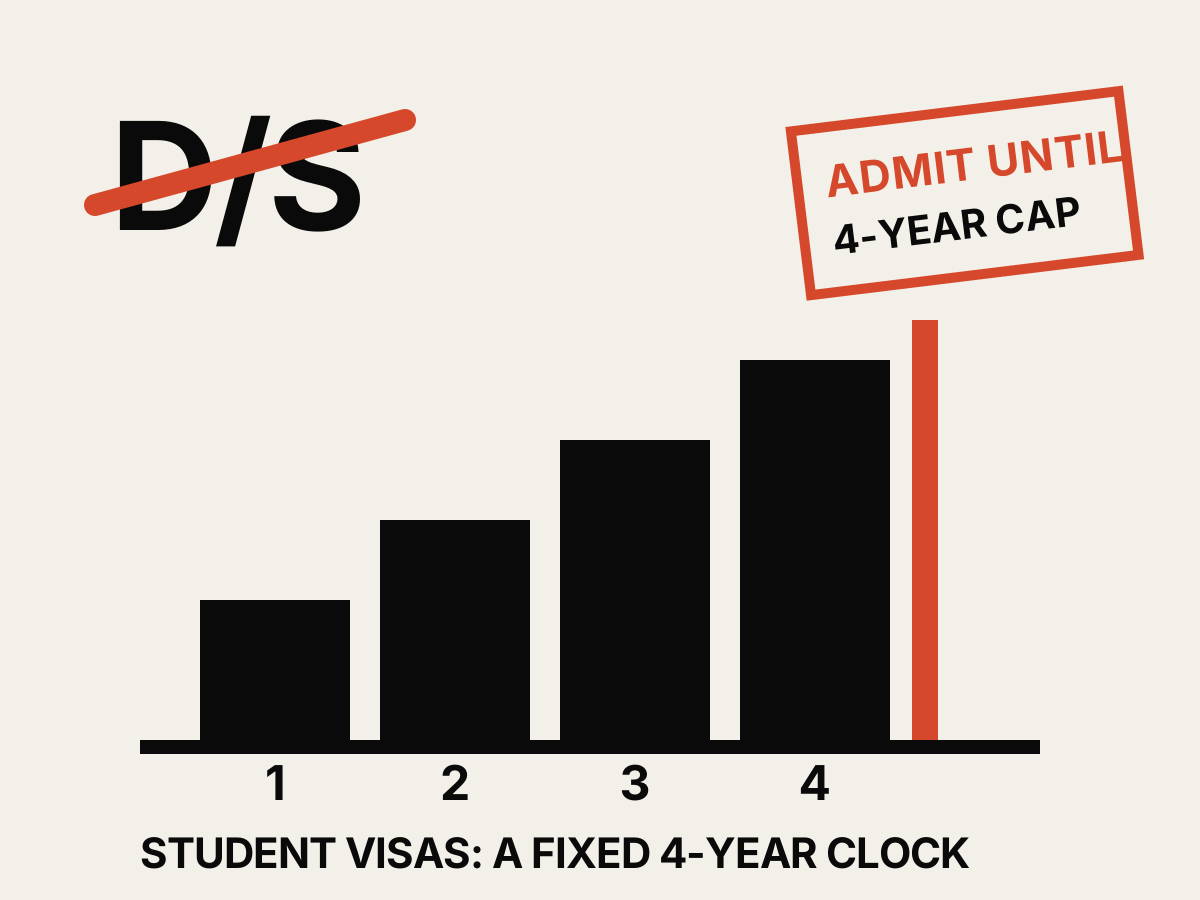
If you are on an F-1 student visa, or a J-1 or I visa, and weighing an EB-2 National Interest Waiver, the ground is about to shift. A new Department of Homeland Security rule puts a hard four-year limit on student visas and ends "duration of status," the decades-old policy that let students and exchange visitors stay for as long as they stayed enrolled. In its place comes a fixed expiration date on your Form I-94, and that date can reshape when and how you file your EB-2 petition.
Key takeaways: A new DHS rule ends duration of status for F, J, and I visa holders and sets a fixed admission period, capped at four years, on Form I-94. It takes effect September 15, 2026. If you plan an EB-2 NIW, a fixed I-94 date and a shorter 30-day grace period tighten your filing and status timeline.
Educational information, not legal advice. NIWKit is written by a self-filer, not an attorney. Consult a licensed immigration lawyer for advice on your specific facts.
What does the new duration of status rule change?
For decades, an F or J admission carried no hard end date. Your I-94 read "D/S," and you kept status by staying enrolled and following the rules. The new duration of status rule replaces that with a specific "admit until" date, the way most other nonimmigrant categories already work.
Under the final rule, F and J nonimmigrants are admitted through the program end date on the Form I-20 or DS-2019, capped at a maximum of four years. Representatives of foreign media (I visas) receive a fixed period as well. When your I-94 date arrives, staying longer requires action, not just continued enrollment.
The final rule was published in the Federal Register on July 17, 2026, and takes effect 60 days later, on September 15, 2026. Current F, J, and I holders already in the United States transition to the new framework, with authorized stay capped at four years from the effective date.
What are the four changes for F, J, and I visa holders?
- Fixed admission caps. F and J stays are tied to your specific program length, not to open-ended enrollment, and cannot exceed four years without an extension.
- Extensions go through USCIS. To stay beyond your I-94 date, you file a formal Extension of Stay with U.S. Citizenship and Immigration Services. That moves oversight from your school's international office to federal adjudicators, and it can bring biometrics, background checks, and fraud screening.
- A shorter grace period. The post-completion window for F-1 students to depart, transfer, or change status drops from 60 days to 30 days.
- Tighter program-change rules. The rule limits how freely you can change academic level or program.
How does the rule affect EB-2 NIW self-filers?
Many NIW self-filers are sitting in F-1 OPT or STEM OPT, or in J-1 status, while they build the record for their petition. Three parts of this rule touch that plan directly.
First, timing pressure. A fixed four-year clock and a 30-day grace period leave less room to drift. If your NIW strategy assumed you could stay enrolled indefinitely while your endeavor matured, that assumption is gone.
Second, status math around the I-140 and adjustment. An approved NIW I-140 does not by itself grant status. If your I-94 now expires on a set date, you need a deliberate plan for how you stay in valid status between filing, approval, and either adjustment of status or consular processing. Falling out of status can complicate a later Form I-485.
Third, more federal scrutiny at every extension. Extensions routed through USCIS mean more touchpoints where an officer reviews your file. That rewards a clean, well-documented record, which is exactly what a strong NIW petition already demands.
What should you do now?
- Find your real I-94 date once the rule is in effect, and work backward from it. Do not rely on old "D/S" habits.
- Map your NIW timeline against that date. Note when you would file the I-140, expected processing, and how you maintain status in the gap.
- Keep your evidence current. The same specificity that satisfies an NIW officer, a well-defined proposed endeavor and independently corroborated letters, also helps if an extension draws questions.
- Confirm fees, forms, and dates at the source. Rules and effective dates move, so check the official USCIS and Federal Register notices rather than any single summary, including this one.
The core NIW test has not changed. You still need to satisfy the three prongs of Matter of Dhanasar, and meet the higher evidentiary bar set by the January 15, 2025 USCIS policy update. What has changed is how much runway you have while you assemble the case.
If you are deciding whether your record is ready to file before the clock tightens, the EB-2 NIW Complete Self-Filer's Pack walks through the sequence step by step, with an editable proposed-endeavor statement template, two fully worked example petitions, and an evidence and exhibit index so nothing slips while your status window narrows.
Frequently asked questions
When does the new duration of status rule take effect?
The final rule was published in the Federal Register on July 17, 2026 and takes effect 60 days later, on September 15, 2026. Current F, J, and I holders transition automatically, with authorized stay capped at four years from the effective date.
Does the 4-year limit apply to current F-1 and J-1 students?
Yes. Current holders under the old duration of status framework move to the new system automatically, with their authorized stay capped at a maximum of four years from the effective date. To stay beyond your I-94 date you must file an Extension of Stay with USCIS.
How does the student visa rule affect an EB-2 NIW green card plan?
An approved I-140 does not by itself grant status. With a fixed I-94 date and a shorter 30-day grace period, you have less runway, so you need a deliberate plan for maintaining valid status between filing, approval, and adjustment of status or consular processing.
Can you still self-file an EB-2 NIW under the new rule?
Yes. The rule changes your timeline, not the EB-2 NIW standard. You still meet the three prongs of Matter of Dhanasar and the January 2025 evidence bar. The main difference is you have less time, which rewards earlier, cleaner preparation.